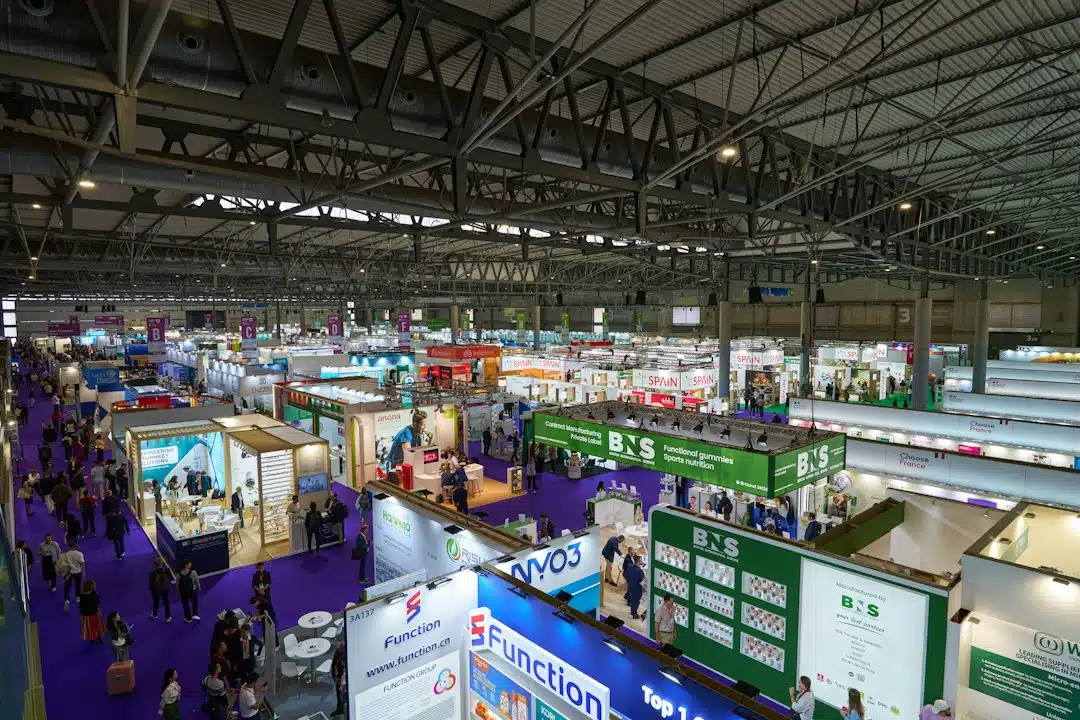
Trade Show Planning Starts With a Measurable Plan
Effective trade show planning begins by setting one clear business goal, building a full budget, and working backward from move-in day. Choose the right show for your audience, assign owners for marketing, logistics, and lead follow-up, and set targets for qualified leads, booked meetings, pipeline, and revenue. Then promote your booth early, train staff to qualify visitors, and follow up with priority leads within 48 hours.
This structure matters because trade shows put exhibitors in front of decision-makers: 81% of attendees have buying authority. But booth space is only one part of the investment. Shipping, show services, travel, staffing, marketing, and post-show outreach all affect the final return.
A strong exhibit is not just a display. It is a short-term campaign with a clear audience, a useful reason to visit, and a defined next step after each conversation. This guide will help you build that system without leaving key details until the last week.
As a marketing manager with experience in trade show planning, I approach each event as part of a larger marketing system rather than a standalone initiative. From pre-show messaging and audience engagement to on-site experiences and post-show follow-up, every touchpoint should have a clear purpose.
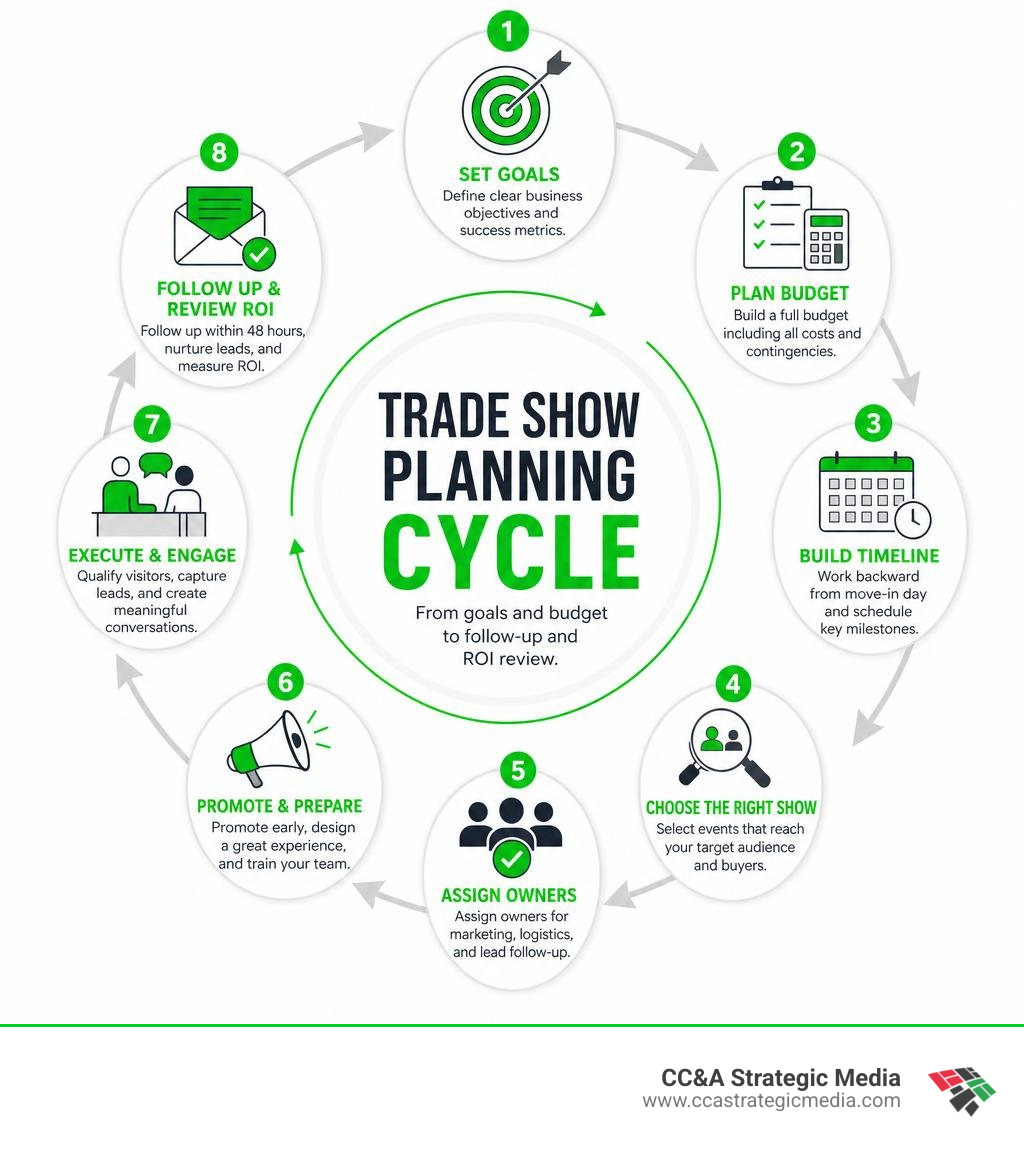
Successful event execution ties directly into your broader commercial framework, requiring a defined brand messaging strategy, alignment with proven marketing best practices, and targeted social media branding to attract attendees long before doors open.
Establishing Clear Goals and Budgets for Trade Show Planning
Every successful trade show campaign begins with financial clarity and strategic discipline. When organizations treat exhibition floors like passive networking opportunities rather than high-performance revenue drivers, they risk misallocating resources. A structured approach ensures that every dollar committed directly supports bottom-line expansion.
Defining Measurable Objectives and ROI Benchmarks
To establish true accountability, trade show objectives must extend far beyond counting business cards or tracking foot traffic. I advise clients to focus on concrete economic benchmarks, such as generating three to five dollars in pipeline revenue for every dollar spent within six months following the event. Because the average cost per qualified lead at a physical exposition is twenty-two percent lower than traditional outbound channels, establishing explicit lead scoring thresholds before opening day is essential.
By defining distinct qualification criteria based on budget, timeline, and decision-making authority, your sales team can immediately segment high-intent buyers from casual visitors. Reviewing a detailed Trade Show Budget Planning Guide enables your organization to align realistic deal sizes with overall exhibition spend, turning lead volume into predictable enterprise pipeline.
Budget Allocation Framework Across Core Expense Categories
A frequent financial miscalculation among exhibitors is assuming that booth space rental represents the bulk of their investment. In reality, physical floor space accounts for only twenty-five to thirty-five percent of your total expenditure. The remainder is distributed across exhibit design, shipping, venue utilities, staff travel, and marketing collateral.
Understanding this split prevents unexpected financial shortfalls. Drayage and material handling fees, along with electrical drops and dedicated data lines, quickly inflate overall costs if not properly anticipated. To maintain fiscal stability, allocate an explicit ten to fifteen percent contingency reserve to absorb unexpected on-site needs. Integrating your event spend within broader marketing services ensures your overall promotional program maintains long-term financial efficiency.
| Expense Category | First-Time / Small Exhibit Allocation | Mid-Sized Program Allocation | Enterprise Exhibit Allocation |
|---|---|---|---|
| Booth Space & Registration | 30% | 28% | 25% |
| Exhibit Design, Rental & Fabrication | 25% | 27% | 30% |
| Shipping, Drayage & Material Handling | 10% | 12% | 12% |
| Show Services (Electrical, Internet, AV) | 8% | 8% | 10% |
| Travel, Lodging & Staff Expenses | 12% | 10% | 8% |
| Promotion, Giveaways & Collateral | 8% | 10% | 10% |
| Contingency Reserve | 7% | 5% | 5% |
The Strategic Timeline: From Early Milestones to Move-In Day
Flawless on-site execution relies on a backward-dated schedule that prevents operational bottlenecks and eliminates expensive rush fees.

Core Phases in Trade Show Planning Timelines
Approaching an exhibition requires a structured operational progression. For major industry expos, initiating strategy six to twelve months in advance provides ample runway to secure prime booth placement and design compelling structures. Moving into the final twelve-week sprint, operations shift toward production milestones and cross-departmental alignment.
By following an established framework, such as the Planning a Trade Show Guide, your leadership team can divide responsibilities into manageable operational gates. At ninety days out, finalize your master budget, confirm floor specs, and assign operational owners. At sixty days, approve booth artwork, secure transport freight, and launch digital promotion. By thirty days out, run staff training simulations, finalize show freight deliveries to the advance warehouse, and confirm on-site technical testing to ensure seamless move-in execution.
Managing Logistics, Vendor RFPs, and Manual Compliance
Operational delays frequently occur when teams fail to review the official exhibitor services manual early in the process. This document outlines critical cut-off dates, architectural height restrictions, and local labor rules. Missing the advance discount deadline for venue utilities can inflate your service expenses by twenty to forty percent.
When selecting structural fabricators or audiovisual partners, distribute a comprehensive request for proposal eight months prior to the event to evaluate vendor responsiveness, fabrication quality, and project management capabilities. Furthermore, routing primary freight to the advance warehouse rather than delivering directly to the venue dock provides a crucial buffer against transit delays, ensuring your materials arrive organized before setup begins.
Designing High-Impact Booth Experiences and Staff Execution
An exhibit space must communicate your value proposition within three seconds of visual contact while empowering your representatives to conduct meaningful business conversations.
Booth Architecture and In-Booth Engagement Assets
An effective trade show footprint balances open architectural flow with targeted engagement zones. Cramped exhibits that place bulky counters at the perimeter create subconscious barriers for passing attendees. By utilizing lightweight silicone-edge fabric graphics, companies not only achieve sleek visual branding but also reduce crate density, which significantly lowers shipping and drayage fees.
Within the booth footprint, incorporate dynamic media that educates attendees without creating physical congestion. Demonstrations showcasing your product capabilities or high-definition loops crafted through professional video production services capture foot traffic and provide natural conversation starters for your floor staff.
Staff Preparation and Uniform Strategies for Maximum Impact
Your on-site team serves as the direct embodiment of your brand reputation. Even the most striking display cannot overcome uninspired or unprepared booth staff. Conduct formal training two weeks before the show to align your team around a strict qualification script, active listening techniques, and proper floor etiquette.
Visual cohesion among staff plays a measurable role in audience engagement. Data indicates that dressing your team in coordinated, professional attire, such as matching branded quarter-zips or high-quality polos, raises booth approach rates by roughly thirty percent. Eliminate on-floor distractions like mobile phone usage or side conversations among colleagues, ensuring every representative remains approachable and ready to engage passing decision-makers.
Multi-Channel Promotion and Pre-Show Audience Outreach
Relying entirely on serendipitous foot traffic is one of the most common trade show mistakes. A high-converting event presence requires a sustained pre-show promotional campaign that drives targeted prospects directly to your booth space.
Digital Campaigns and Dedicated Event Landing Pages
Begin marketing your event presence six weeks before the show floor opens. Create dedicated, conversion-optimized landing pages that provide your booth location, outline special announcements, and enable prospective buyers to pre-schedule one-on-one executive briefings. High-performing exhibitors regularly fill fifteen to twenty-five meeting slots before arriving on site, insulating their investment from variable floor traffic.
Building these digital assets through specialized web development ensures high-speed mobile performance and seamless calendar integration. Coordinate these landing pages with targeted social outreach through social media services across relevant industry networks, pairing compelling preview content with precise event hashtags to engage registered attendees.
Public Relations and Branded Merchandise Strategy
Coordinate your trade show presence with strategic media announcements to elevate your enterprise authority. Securing coverage in industry trade publications through professional public relations services amplifies your market visibility and positions your brand as an industry thought leader.
When planning promotional merchandise, discard low-quality novelties that end up discarded in hotel trash cans. Instead, utilize a tiered giveaway framework. Low-cost functional items can serve as broad traffic drivers, while premium branded merchandise should be reserved for prospects who complete an in-depth product demonstration. Branded apparel drives eighty-nine percent post-show brand recall, substantially outperforming generic promotional items and extending your visibility long after the exhibition concludes.
Lead Capture Protocols and Post-Show Conversion Systems
The true return on your trade show investment is determined by what happens after the exhibition hall lights turn off. Without a systematic data collection and outreach strategy, valuable pipeline opportunities quickly evaporate.
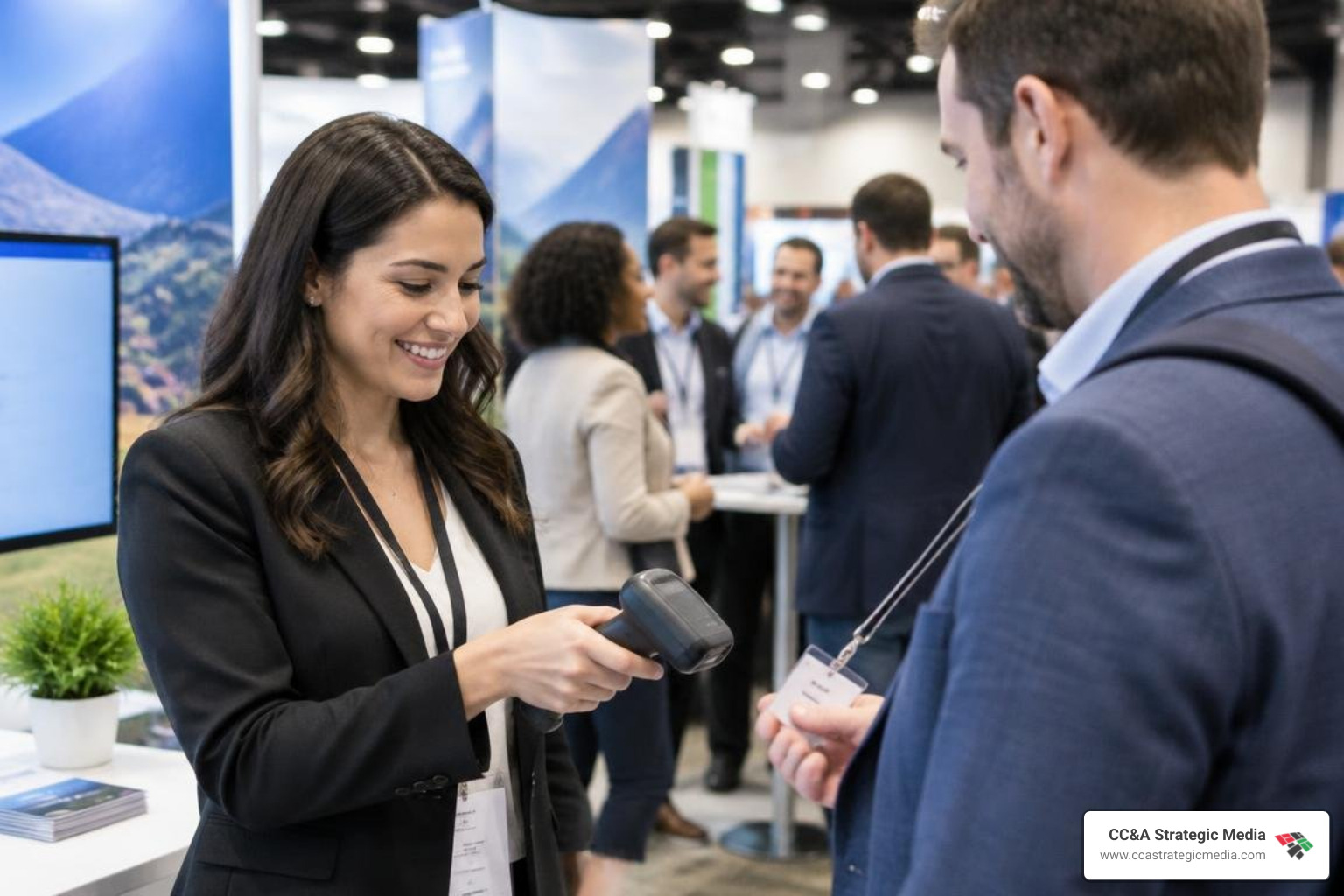
Accelerating Follow-Up in Trade Show Planning Workflows
Data shows that sixty-eight percent of trade show leads go cold within seven days if not engaged through a structured follow-up process. To prevent this loss, replace traditional paper business card collection with digital lead retrieval systems that sync directly into your centralized customer relationship management platform.
Equip your representatives to tag each contact with specific qualification notes and lead tiers immediately following a conversation. Hot prospects should receive personalized outreach from their assigned account executive within forty-eight hours, while warm and informational contacts enter automated, highly relevant nurture sequences. Rapid response times demonstrate organizational agility and keep your solutions top-of-mind.
Post-Event Debrief and Long-Term Performance Attribution
Within five business days of show completion, assemble your internal event stakeholders for a comprehensive post-mortem debrief. Evaluate qualitative factors, including booth location efficacy, messaging resonance, and logistical performance, documenting clear operational adjustments for future event cycles.
Long-term measurement requires ongoing revenue tracking at three, six, and twelve months post-event to attribute closed contracts accurately back to initial booth engagements. Integrating these insights into your overarching digital marketing services ensures your ongoing trade show program continuously optimizes cost-per-acquisition benchmarks and builds compound business equity over time.
Frequently Asked Questions about Trade Show Planning
How far in advance should an organization begin trade show planning?
For major flagship exhibitions, the planning cycle should ideally begin six to twelve months in advance. This extended timeframe allows your team to secure prime floor space, issue vendor RFPs, complete custom exhibit fabrication, and negotiate favorable travel rates. Smaller regional exhibitions or standard rental layouts can be planned within a structured eight to twelve-week timeline without sacrificing execution quality.
What is the most common hidden cost in trade show budgets?
Drayage, also known as material handling, represents the most common surprise expense for exhibitors. This is the fee charged by the general service contractor to move your freight from the venue delivery dock to your assigned booth space, calculated by crate weight and density. Other common hidden fees include electrical connections, high-speed dedicated internet circuits, and late-order penalties incurred after early-bird discount deadlines pass.
How do exhibitors prevent trade show leads from going cold?
Preventing lead decay requires establishing your post-show follow-up workflows and email collateral before leaving for the event. By capturing contact details through digital badge scanners and applying immediate lead-tier tags on the show floor, your sales development team can initiate customized outreach within forty-eight hours of interaction, ensuring conversations continue while buyer intent remains high.
Conclusion
A high-performing trade show program is never an isolated marketing experiment. When built upon big-data insights, clear audience segmentation, precise operational timelines, and disciplined post-event execution, exhibitions serve as one of the most dependable growth engines available to modern businesses.
At CC&A Strategic Media, we deliver custom marketing, branding, and communications strategies rooted in buyer psychology, advanced digital technology, and scientific measurement to drive meaningful enterprise expansion. I invite you to connect with me and our team to discover how an integrated marketing strategy can transform your next trade show exhibit into a sustainable pipeline of high-value business relationships.