Understanding the Modern Lead Generation Law Firm Model
Building a successful legal practice requires more than exceptional courtroom skills or deep statutory knowledge. If prospective clients cannot find you at the exact moment they face a legal hurdle, your expertise remains untapped. Lead generation bridges this divide, establishing a predictable bridge between an individual seeking legal guidance and your firm.
In modern legal marketing, client acquisition goes beyond generating arbitrary website traffic. It is an intentional system designed to produce qualified inquiries—contacts from individuals who have viable matters that align with your firm’s operational capacity and revenue objectives.
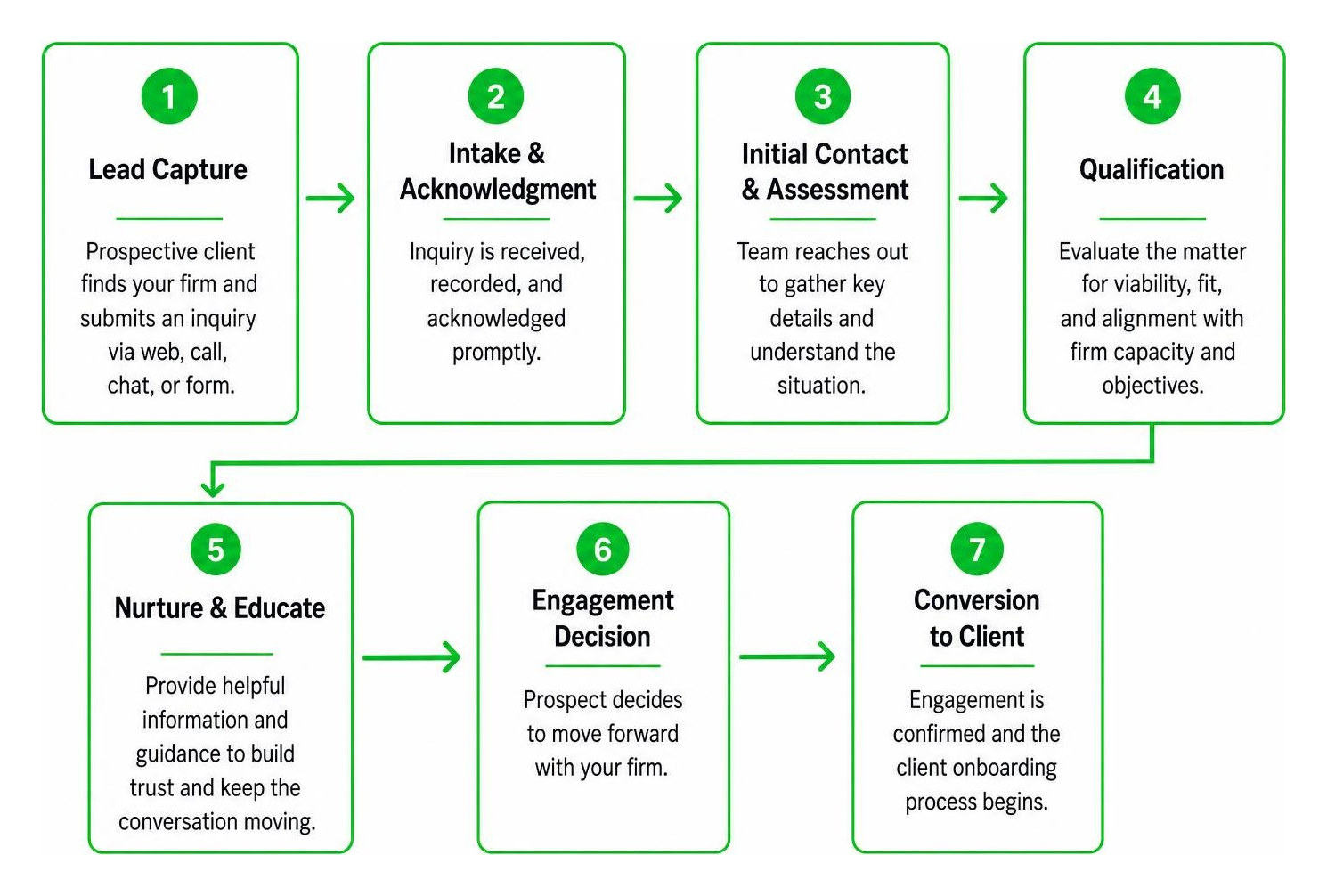
A functional strategy relies on sales psychology. When people seek legal counsel, they often experience stress, urgency, and uncertainty. If your firm’s digital presence communicates empathy, clarity, and authority, you reduce their hesitation.
To turn interest into action, your firm must align its market messaging with actual intake capabilities. Generating hundreds of inquiries does little good if your team lacks the bandwidth to review them promptly. A well-rounded framework, detailed in The Ultimate Guide to Law Firm Marketing and Growth, balances brand positioning, targeted outreach, and internal operational readiness to achieve sustainable firm revenue growth.
Evaluating the Core Channels for a Lead Generation Law Firm
No single channel should carry the entire burden of your firm’s growth. Diversifying your marketing portfolio protects your business from sudden platform algorithm shifts while ensuring you capture prospective clients across various stages of intent.
| Acquisition Channel | Primary Benefit | Typical Time Horizon | Level of Client Intent |
|---|---|---|---|
| Organic Search (SEO) | Builds compounding authority and sustainable long-term visibility without continuous per-click costs. | 6 to 12 months | High to Informational |
| Paid Search & Ads | Delivers immediate top-of-page visibility for direct, high-intent legal searches. | Immediate to 30 days | Very High |
| Targeted Social Media | Educates target audiences, builds brand affinity, and nurtures passive prospects. | 30 to 90 days | Moderate to Latent |
| Direct Lead Services | Provides immediate inquiry volume to fill operational capacity quickly. | Immediate | Variable to High |
Search Engine Optimization (SEO) establishes organic search authority by optimizing your site architecture, technical health, and informational resources. When individuals research legal questions, comprehensive content positions your attorneys as trusted advisors.
For faster acquisition, high-intent paid advertising captures individuals actively seeking immediate representation. Leveraging search ads alongside options like The Local Advantage for Law Firms Using Google LSAs puts your firm directly at the top of search engine results when prospective clients need urgent assistance.
Complementing search strategies, social platforms allow you to educate prospective clients, establish brand presence, and retarget past site visitors. Exploring The Legal Guide to Dominating Facebook Advertising and Getting Clients shows how visual storytelling and precise audience targeting can nurture leads who may not yet be actively searching on Google.
Strategic Referral Networks and Reputation Management
While digital ads and search optimization capture new interest, your existing reputation remains a powerful driver of high-value cases. Online client review systems and proactive digital feedback management reinforce your credibility across every marketing channel.
A prospective client who discovers your firm through an ad will almost certainly check your public reviews before calling. Modern legal consumers treat peer reviews with the same weight as personal recommendations. Establishing structured systems to request feedback after favorable matter resolutions creates a positive cycle that lifts both search rankings and conversion velocity.
Similarly, professional referral networks remain an essential pillar of growth. By maintaining regular communication with professional peers, you can position your firm to receive matters that fall outside another attorney’s scope. Systematizing these professional relationships—as explored in How to Build a Referral Machine and Fill Your Docket—ensures your docket stays full through mutually beneficial professional relationships.
Building a Sustainable Lead Generation Framework
Law firms frequently struggle with whether to build marketing operations entirely in-house or partner with external client acquisition specialists. Each path offers distinct trade-offs in cost-per-acquisition, campaign control, operational scalability, and transparency.
Managing campaigns in-house provides complete control over your brand voice and messaging. You own the digital assets, data, and landing pages. However, this approach requires significant overhead, ongoing management, and specialized technical expertise across search algorithms, creative development, and tracking software. Finding a balance is critical, and How to Market Your Law Firm Without Losing Your Mind outlines ways to maintain marketing consistency without overwhelming your team.
Working with third-party providers can deliver an immediate influx of inquiries, which helps fill schedules during slower periods. However, quality can vary. Without clear standards for screening and exclusivity, firms risk paying for lukewarm contacts that drain administrative hours.
Exclusive Leads versus Shared Leads
When evaluating external sources or direct marketing channels, the distinction between exclusive and shared inquiries directly impacts your operational efficiency and conversion rates.
Exclusive leads represent inquiries delivered to your firm alone. Because the prospective client is not contacted by multiple law offices at once, your team can focus on consultative intake rather than racing competitors. This dynamic improves conversion probability and builds trust from the first conversation.
In contrast, shared leads are inquiries sold concurrently to three, four, or more competing law practices. This sparks an aggressive race to contact the prospect first. Shared leads often frustrate prospective clients, who get bombarded by calls, while forcing firm staff into high-pressure sales calls.
Securing exclusive inquiries delivered in real time gives your team the best opportunity to showcase empathy and professionalism. Understanding inquiry sources and intent levels, as detailed in An Essential Guide to Where Your Best Cases Come From, allows you to allocate marketing capital where it yields the highest return on investment.
Selecting the Right Strategy for Your Firm’s Scale
Choosing the right marketing mix depends on your budget, growth goals, and available resources. First, assess internal bandwidth before launching aggressive acquisition campaigns to ensure your administrative team can handle new incoming volume without dropping active client responsibilities. Next, define clear growth targets by matching your chosen channels to your timeline; targeted paid campaigns work best for immediate needs, while long-term growth warrants early investment in organic search and brand authority. Finally, implement unified tracking to ensure every marketing dollar is tied directly to inquiry volume, consultation rates, and signed agreements inside your CRM.
A thoughtful approach to Lead Generation coordinates organic search, targeted paid campaigns, and systematic intake into a unified acquisition engine.
Intake Systems and Pre-Screening Architecture
Generating inquiries is only half the equation; your intake workflow determines whether those inquiries turn into signed clients. When an intake system lacks structure, staff spend hours fielding calls from individuals whose legal needs do not match the firm’s focus.

A modern intake structure incorporates interactive lead capture widgets and multi-step screening forms. By embedding a specialized Law Firm Lead Generation Widget on your high-traffic pages, you allow site visitors to self-select their legal category, describe their timeline, and share critical case facts before an intake specialist picks up the phone.
Applying structured screening criteria filters out misrouted inquiries, gathers core facts upfront, and routes qualified prospective clients to the right legal team. For a step-by-step breakdown of how to structure this process, refer to Legal Intake Services 101: A Quick-Start Guide.
Implementing Technology for a Lead Generation Law Firm
Legal industry research shows that 67% of legal calls go unanswered after standard business hours, and 40% of law firms lose viable leads due to slow follow-up. With the average revenue lost per missed case lead estimated at over $10,000, unaddressed calls represent a significant operational leak.
Adopting modern legal intake technology helps safeguard your pipeline. Intelligent 24/7 AI voice assistants can answer after-hours calls, gather preliminary details, screen for matter fit, and schedule consultations on your team’s calendar. Automated form triage evaluates responses dynamically, directing urgent matters to on-call intake specialists while organizing general questions for next-day review. Direct CRM integration routes every web inquiry, chat interaction, and phone call directly into platforms like MyCase or Clio Grow, ensuring no prospect slips through the cracks. In fact, firms utilizing dedicated intake capture forms inside modern CRMs often achieve an 18% lead conversion rate or higher.
To see how specialized intake technology pairs with targeted campaign management to capture high-intent inquiries around the clock, explore Legal Case Leads.
Follow-Up Best Practices and Pipeline Conversion
Speed-to-contact remains the single most influential metric in modern legal client acquisition. Industry data reveals that 78% of legal clients ultimately retain the first attorney who responds to their inquiry.
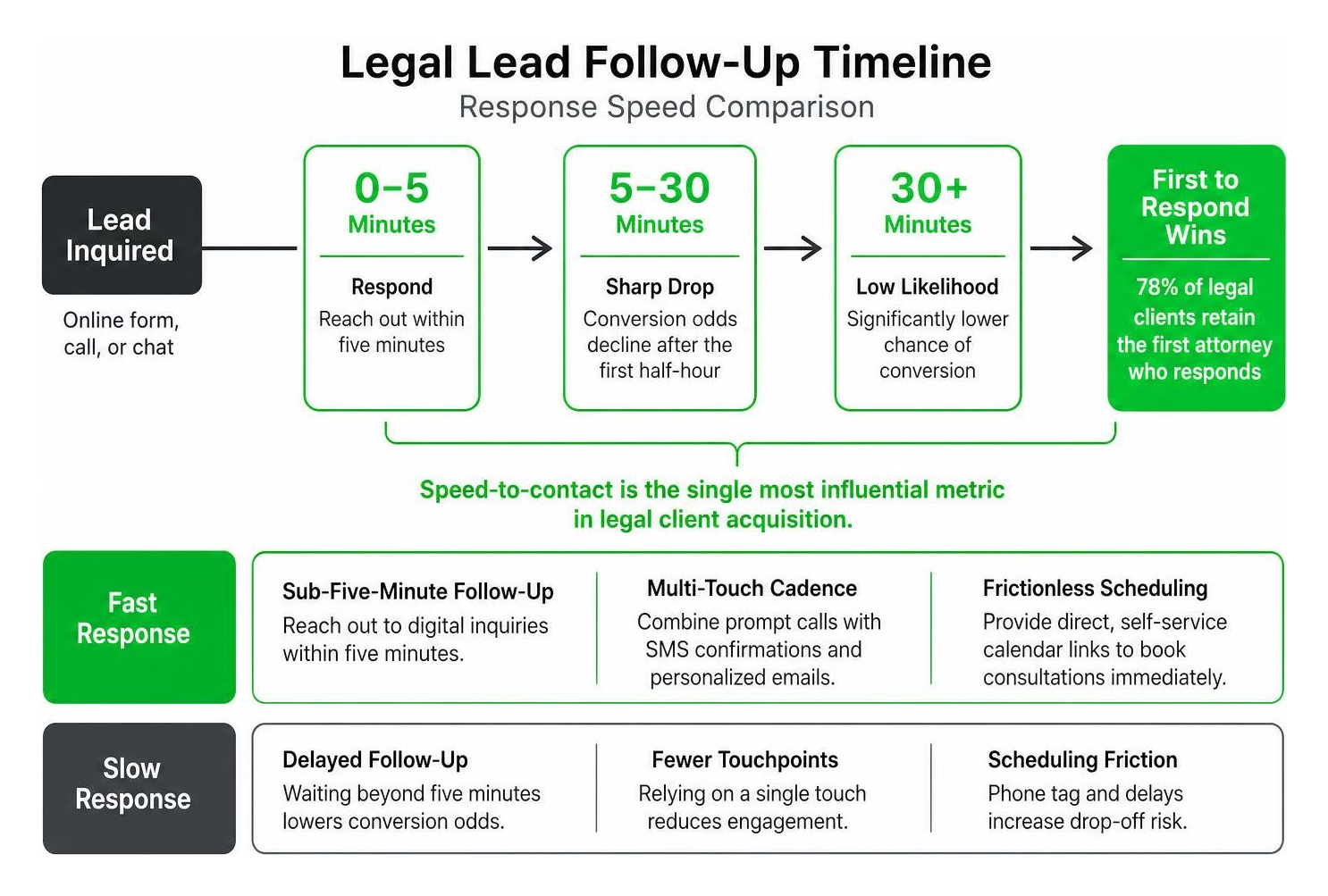
To convert new inquiries into signed clients, implement disciplined operational practices. Maintain a sub-five-minute response time by reaching out to digital inquiries within five minutes of submission, as conversion odds drop sharply after the first half-hour. Employ a multi-touch cadence that combines prompt phone calls with automated SMS confirmation messages and personalized email introductions. Provide frictionless scheduling through direct, self-service calendar links so qualified prospects can book consultations immediately without phone tag. Finally, establish clear next steps by outlining what the prospect should expect during their initial consultation and what documents they need to prepare, reinforcing your firm’s organization from day one.
Measuring ROI and Avoiding Critical Pitfalls
To ensure your marketing creates sustainable profit, track performance across the entire prospective client journey using clear attribution modeling:
$$\text{Cost Per Acquisition (CPA)} = \frac{\text{Total Channel Spend}}{\text{Total Signed Clients Generated}}$$
Beyond basic cost-per-click metrics, focus your analysis on key operational metrics. The inquiry-to-consultation rate measures the quality of your lead targeting and the speed of your intake team. The consultation-to-retained rate reflects how well your initial consultations establish value and build trust. Customer acquisition cost tracks the total marketing and intake investment required to secure a single signed agreement. Finally, lifetime client value captures the total realized revenue generated across a matter, including future retained services and downstream referrals.
Watch for vendor red flags, such as long-term lock-in contracts with no performance guarantees, vague lead-sourcing practices, and shared lists that pit your firm against multiple competitors. Maintain flexible agreements with providers that offer clear reporting, verified contact methods, and transparent lead routing.
Frequently Asked Questions About Legal Lead Generation
What is the most cost-effective lead generation method for a law firm?
The most cost-effective long-term method is a balanced approach combining organic search authority (SEO) with conversion rate optimization on your website. While search optimization requires time to build momentum, it creates lasting digital equity that delivers qualified inquiries without ongoing per-click fees. For immediate caseload needs, targeted paid search provides predictable, high-intent volume when paired with a disciplined intake workflow.
How quickly should a law firm follow up with new leads?
Your team should aim to respond within five minutes of an inquiry being submitted. Because nearly four out of five clients retain the first legal professional who connects with them, response speed directly dictates your conversion rate. If an inquiry arrives after hours, automated confirmation emails, SMS notifications, and 24/7 AI-driven intake tools should engage the prospect immediately to secure the consultation.
What are the main red flags when evaluating a lead generation provider?
The biggest red flags include shared inquiries where providers resell the same lead to multiple competing practices, opaque sourcing where vendors hesitate to show how prospective client data is gathered, rigid long-term lock-in contracts without performance accountability, and recycled contacts that deliver outdated inquiries or unverified form fills resulting in disconnected numbers and low conversion rates.
Conclusion
A successful client acquisition strategy combines intentional marketing campaigns with structured intake systems and disciplined follow-up. By diversifying your outreach across organic search, targeted advertising, and reputable direct channels—while using modern intake technology to capture every opportunity—your firm can build a predictable pipeline of high-value matters.
At CC&A Strategic Media, we take a holistic marketing approach rooted in our Strategic Ops methodology. We unite data-driven advertising, sales psychology, intake optimization, and modern technology to help legal practices scale efficiently without adding administrative chaos.
If you are ready to refine your intake systems, accelerate response times, and convert more inquiries into retained cases, explore The Ultimate Guide to Legal Intake Training Basics or connect with me, Roxanne St. Marie, to evaluate your firm’s current client acquisition infrastructure.