Why Law Firm Crisis Management Needs a Clear Plan
Law firm crisis management starts with a simple rule: act quickly, but do not act alone. When a serious issue threatens operations, trust, or reputation, leadership should activate a clear response plan, confirm the facts, assign decision-makers, protect key records and systems, and align every public message with legal guidance.
A strong response does more than address the immediate problem. It keeps leadership focused, helps staff understand what to do, and reduces the risk that rushed statements, missed deadlines, or disconnected teams make the situation worse. The most effective plans connect legal oversight, communications, operations, technology, and stakeholder support from the first hours through recovery.
For business owners and law firm leaders, this is not just a legal concern. It is a growth and trust issue. A crisis can quickly affect client confidence, employee morale, online visibility, and the firm’s ability to operate. Strategic Ops is a marketing approach that helps connect leadership decisions, communications, data, and client experience so the firm can respond with clarity rather than confusion.
I’m Roxanne St. Marie, and I have nearly two decades of experience in legal marketing, client growth, intake, operations, CRM systems, and leadership. In this guide, I’ll show how law firm crisis management can protect client trust while supporting smarter long-term business decisions.
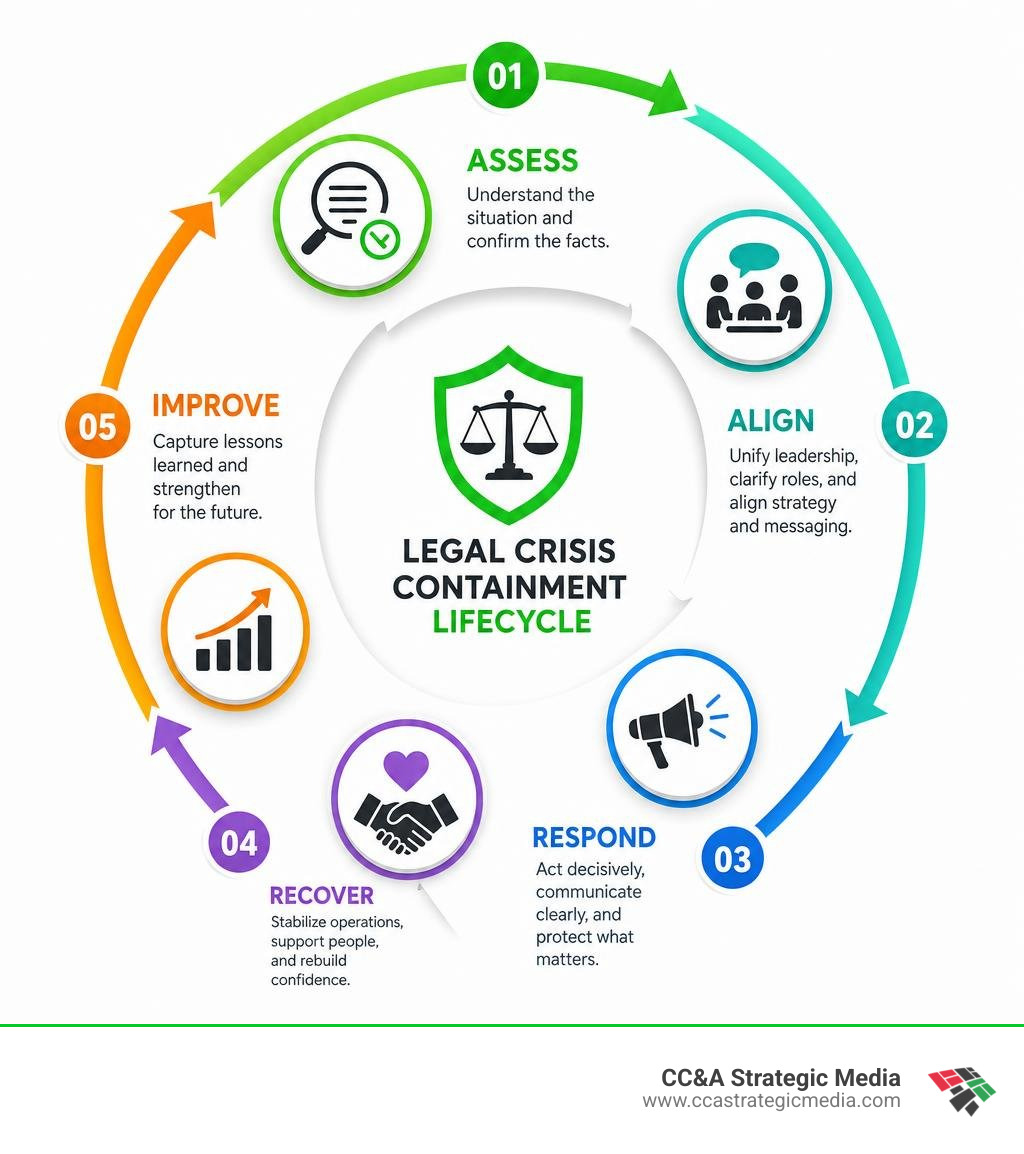
Key areas connected to law firm crisis management include establishing a forward-looking business strategy for lawyers, structuring comprehensive law firm succession planning, and adopting proactive measures to improve law firm efficiency.
The Core Pillars of Modern Law Firm Crisis Management
Crisis management in the legal profession has undergone a massive evolution. In past decades, unexpected events were often handled reactively, treated as sudden fires to extinguish before resuming normal operations. Today, the landscape is entirely different. Over half of the top 50 AmLaw firms now boast dedicated practice groups with “crisis” explicitly in their titles, and premier directories like Chambers & Partners evaluate crisis management as a standalone discipline.
The emergence of dedicated crisis practices reflects a crucial realization: acute organizational disruptions cannot be solved through conventional litigation or standard advisory work alone. When a business-defining event hits, it triggers simultaneous pressure across legal liability, regulatory scrutiny, digital perception, and core operational viability.
Traditional counsel often focuses narrowly on legal exposure, carefully parsing filings and advising silence. However, modern corporate leadership cannot afford to operate in a vacuum. A coordinated strategy requires multidisciplinary alignment that preserves institutional trust without creating unnecessary legal risk.
| Strategic Focus Area | Traditional Legal Services | Dedicated Crisis Management Response |
|---|---|---|
| Operational Pace | Measured, methodical, court-driven timelines | Immediate, accelerated containment within hours |
| Strategic Scope | Narrow focus on legal defense and statutory liability | Comprehensive focus across legal, public, and regulatory fronts |
| Communications Alignment | Default to “no comment” and minimal disclosure | Proactive narrative framing and transparent stakeholder management |
| Team Structure | Siloed practice groups and department heads | Multidisciplinary teams uniting legal, PR, and operations |
| Core Metric of Success | Courtroom verdict, settlement, or arbitration win | Total enterprise protection, continuity, and brand preservation |
Understanding these distinctions is essential when designing a broader business strategy for lawyers. When you build an organization prepared for severe disruption, you insulate your bottom line, preserve your client relationships, and ensure that leadership maintains the focus required to run day-to-day operations.
Pre-Incident Preparation: Building Organizational Resilience
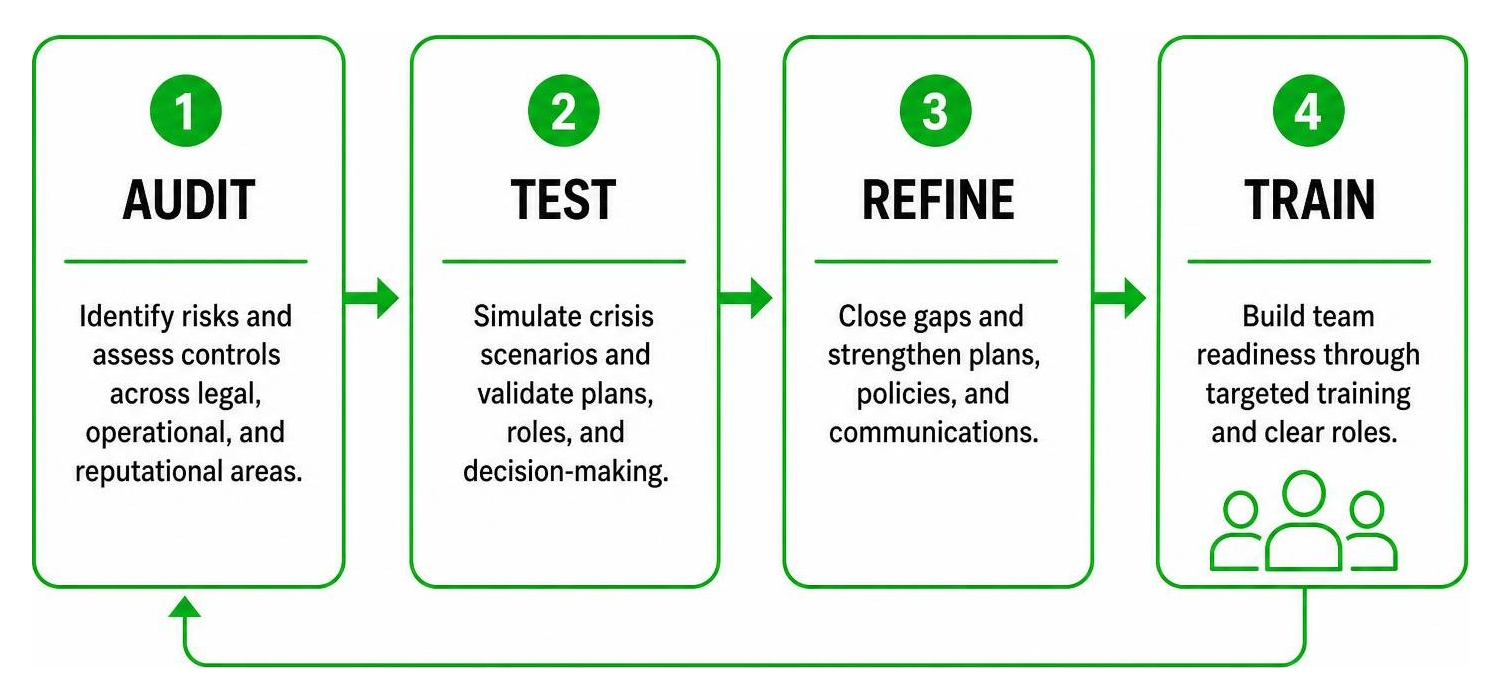
The best time to manage a high-stakes emergency is long before it ever happens. True resilience is built during “clear days”—those calm operational periods when leadership has the mental bandwidth to identify vulnerabilities, update governance frameworks, and establish clear decision hierarchies.
Leading institutions emphasize that proactive risk management forms the foundation of any defensible response strategy. When an unexpected event occurs, regulatory bodies and the public will examine whether the organization exercised appropriate care beforehand. Establishing structured Crisis Response and Risk Management capabilities ensures that your firm is not improvising under intense public scrutiny.
Proactive Auditing and Strategic Risk Assessments
A proactive audit serves as an enterprise stress test. Rather than assuming internal systems are airtight, leadership must routinely evaluate data security, regulatory reporting workflows, financial oversight, and employee grievance mechanisms.
Conducting periodic compliance reviews allows firms to detect minor operational misalignments before they compound into systemic emergencies. By continuously evaluating internal systems and improving law firm efficiency, organizations create documented records of institutional due care. This documented vigilance can prove decisive when discussing matters with external regulators or oversight authorities.
Developing Comprehensive Playbooks for Law Firm Crisis Management
An emergency response playbook is not a static binder gathering dust on a high shelf; it is an active operational manual. A comprehensive playbook establishes specific escalation triggers with clear criteria defining what constitutes an operational incident versus an enterprise-level crisis. It also outlines a defined chain of command with an explicit roster identifying the core decision-making group, alternates, and authorized spokespersons.
Additionally, the manual supplies rapid mobilization checklists containing step-by-step containment protocols for the first two hours, four hours, and twelve hours of an emerging incident. It incorporates pre-approved messaging shells and internal communication drafts that ensure rapid, legally sound distribution. Through clear-day readiness, leadership replaces panic with disciplined execution.
Immediate Response Protocols: The First 48 Hours

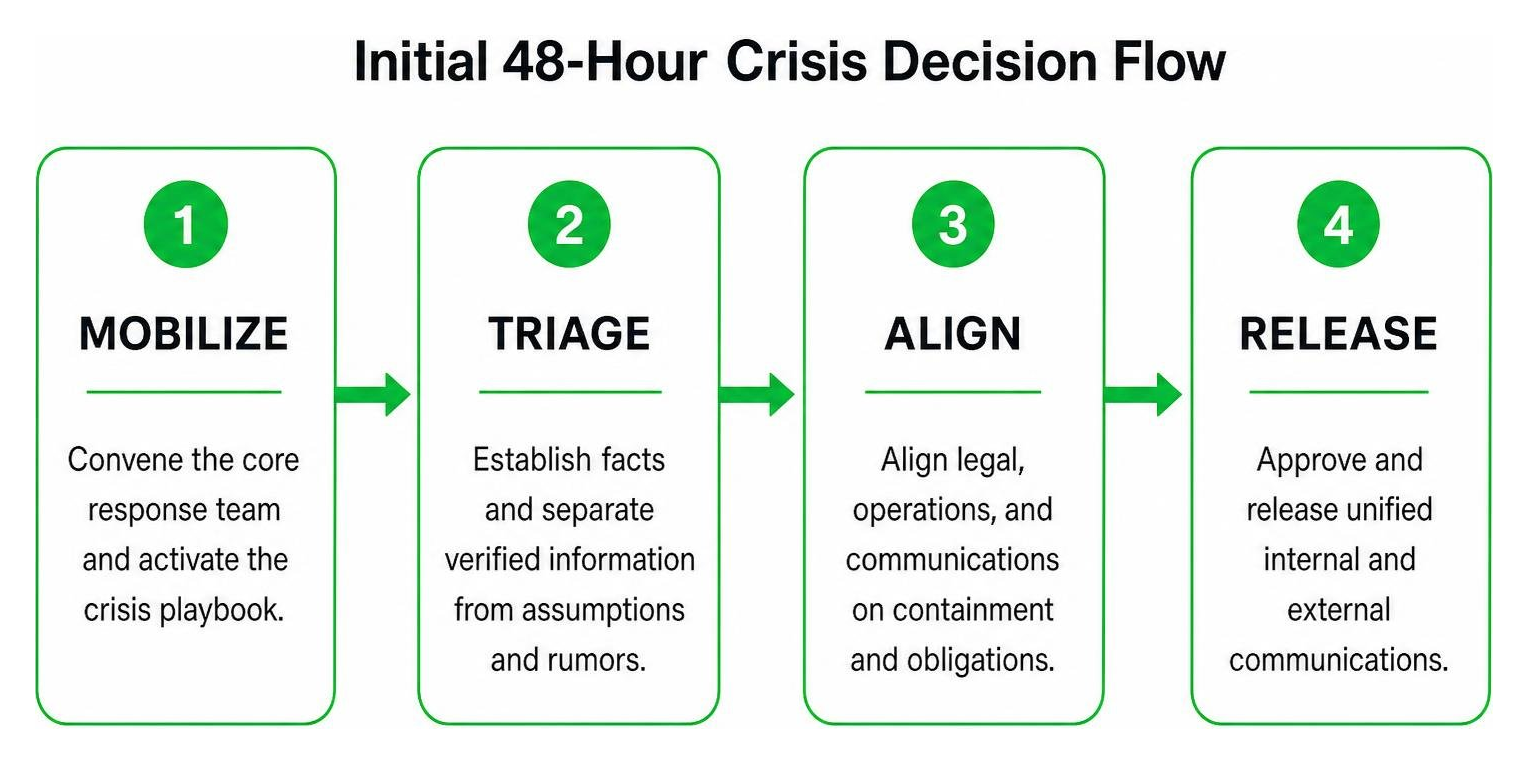
The first 48 hours of any severe operational disruption determine the long-term trajectory of the organization’s reputation and legal exposure. In modern information environments, news travels instantly, public narratives take root within minutes, and delayed responses are frequently interpreted as admissions of fault or institutional paralysis.
Top Crisis Management Lawyers recognize that swift action must be balanced against the risk of making premature, ill-informed public statements. Immediate containment focuses on establishing the verifiable facts, securing critical systems, and providing leadership with the operational breathing room needed to make calculated decisions.
Rapid Multidisciplinary Decision-Making
When an incident breaks, the immediate impulse of inexperienced teams is often to issue a hurried denial or initiate broad external commentary. Seasoned leadership takes a more structured approach. First, leadership mobilizes the core response team, convening designated crisis leads, executive management, legal advisors, operational heads, and strategic communications counsel. Next, the team executes fact triage to separate verified data from early assumptions, rumors, and speculative reporting. From there, leadership establishes legal containment by securing physical, financial, and digital evidence to maintain investigative integrity. Finally, the team identifies regulatory disclosure obligations to determine statutory reporting deadlines across governing agencies and prevent compounding compliance violations.
Aligning Communications and Legal Governance
The traditional divide between public relations and legal defense is a dangerous vulnerability during an unfolding event. If legal counsel operates independently of communications specialists, public messaging may compromise regulatory defense positions. Conversely, if public affairs teams speak without legal guidance, statements may inadvertently establish liability or waive privileges.
Every outward-facing communication—whether an internal email to employees, a press statement, or an update to clients—must reflect unified legal and strategic messaging. By aligning narrative framing with rigorous legal governance, organizations protect their standing in both the court of law and the court of public perception.
Navigating External Stakeholders and Multijurisdictional Pressure
As an incident develops, pressure rarely comes from a single source. Large-scale challenges regularly trigger concurrent inquiries from regulatory bodies, oversight committees, key commercial clients, industry partners, and digital media channels.

Successfully managing multijurisdictional scrutiny requires coordinated messaging that addresses differing regulatory requirements without creating contradictory statements. As firms mature and focus on expanding your law practice, building scalable oversight structures becomes central to managing operational risk across diverse markets.
Managing Strategic Public Relations and Brand Equity
Public perception during a challenging event is shaped not only by what occurred, but by how transparently and responsibly leadership addresses the issue. A modern crisis strategy integrates external communications advisors who understand search engine perception, brand positioning, and media management.
Protecting brand equity requires direct, empathetic, and factual engagement with core audiences. Keeping internal staff and associates informed prevents internal leaks, stabilizes team morale, and ensures consistent messaging across the entire organization. Meanwhile, direct and professional outreach to active clients and partners reassures them that their interests and sensitive data remain secure. For the public and media outlets, providing structured and timely updates through designated spokespersons prevents external commentators from relying entirely on third-party speculation.
Sustaining Operational Continuity in Law Firm Crisis Management
An enterprise cannot afford to halt routine business operations while managing an active disruption. If executive leadership becomes entirely consumed by an emerging inquiry or investigation, everyday client deliverables suffer, business development stalls, and organizational revenue declines.
Effective crisis governance delegates containment responsibilities to a dedicated response team, freeing executive leadership to maintain business continuity. Once the acute phase subsides, conducting a formal post-incident debrief allows the firm to identify systemic root causes, update internal compliance frameworks, and reinforce long-term operational resilience.
Frequently Asked Questions About Legal Crisis Preparedness
What distinguishes rapid crisis response from traditional legal practice?
Traditional legal practice focuses primarily on procedural disputes, statutory interpretations, and structured litigation across long timeframes. In contrast, rapid crisis response demands immediate, multidisciplinary action within hours. A dedicated response integrates regulatory defense, executive decision-making, operational containment, and high-stakes communications to safeguard the entire enterprise from reputational and economic collapse.
How frequently should leadership conduct crisis simulation exercises?
Organizations should conduct tabletop crisis exercises at least once a year. These simulated scenarios test the firm’s playbooks against realistic events, such as major data security incidents, executive disruptions, or regulatory enforcement actions. Regular simulations pressure-test communication channels, uncover gaps in decision-making authority, and ensure team members can execute their duties under pressure.
What external specialists should be integrated into a response plan?
A comprehensive crisis framework typically incorporates external strategic communications advisors, forensic technical investigators, regulatory liaisons, and independent auditing specialists. Having pre-vetted relationships with these specialists ensures immediate deployment without the administrative delays of negotiating retainers and vetting vendors during an unfolding emergency.
Conclusion
Managing an operational emergency successfully is never an accident; it is the natural result of disciplined preparation, unified leadership, and clear-headed communication. When organizations view crisis preparedness not as a burdensome chore, but as a core pillar of institutional health, they protect their reputation, maintain client trust, and build an enterprise capable of weathering severe market disruptions.
By combining proactive risk auditing, comprehensive playbooks, and multidisciplinary coordination, your firm can navigate complex disruptions with confidence and clarity. Strengthening these internal systems works hand in hand with your broader efforts in law firm marketing and growth.
At CC&A Strategic Media, we deliver custom marketing, advertising, and PR strategies driven by data analysis, brand value alignment, and demographic targeting to achieve meaningful growth. Our holistic approach unites sales and marketing psychology, advanced technology, art, and science. Through CC&A Strategic Ops, we provide an operational foundation offering fractional leadership, dedicated marketing coordination, and full-stack agency execution to power your business growth.
To build long-term resilience and elevate your brand, explore our comprehensive marketing and communications strategies or connect with me, Roxanne St. Marie, to start building your strategic roadmap today.